

October 1, 2026
AI Wrote The Book. Should I Still Read It?
Before we get into it, a short scene. This actually happened.
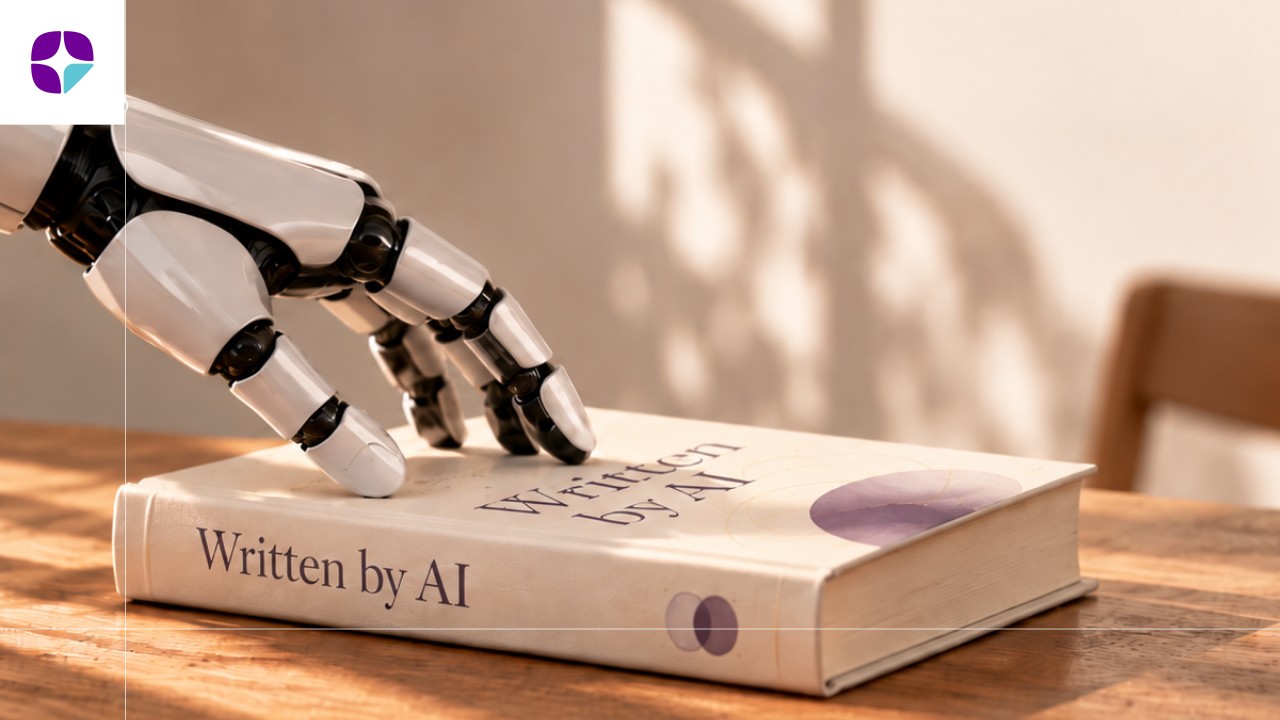
Before we get into it, a short scene. This actually happened.
Publishers: We love it. This is the kind of debut that changes careers. We are talking about a fourteen-way bidding war. Two million dollars.
Jerry: Thank you. I have been working on this for years.
Publishers: One question before we finalise everything.
Jerry: Of course.
Publishers: Did you use AI?
Jerry: Only for research. I ran an open-source model locally to look up technical details, things like what chemical could dissolve a human body for the plot. The prose is entirely mine.
Publishers: We will need to verify how the manuscript evolved.
Jerry: Alright, I understand.
Silence…
Agents: We are withdrawing the manuscript. We can no longer authenticate the process.
Jerry: ...
The $2 million deal was gone.
Hello, readers.
Imagine buying a book you absolutely love.
You underline passages. You recommend it to your friends. You tell someone, “You have to read this.”
Months later, you discover that the author used AI to help write it.
Would that change how you feel about the book?
Now, hello authors.
You used AI to brainstorm. You used it to restructure a difficult chapter. You asked it to point out repetitive sentences. You used it to fix your grammar.
Maybe it even helped you get past a brutal case of writer's block.
Do you owe your readers an explanation?
Jerry Falade is a Nigerian author. His debut crime novel, Call Me, I'll Hide the Body, triggered a fourteen-way bidding war among publishers in the United States and United Kingdom. The reported deal value exceeded two million dollars — roughly 2.7billion naira. It was the kind of publishing story Nigeria had never seen before.
Then his agents withdrew the manuscript, saying they could no longer verify how it had evolved. The deal collapsed. Falade denies using AI to write the book. He says his use of AI was limited to research, running a local model to look up specific technical details his plot required.
Whether or not AI touched a single sentence of his prose, the outcome was the same. The question alone was enough.
And suddenly, one Nigerian writer's story had become the entire publishing industry's conversation.
The question that changes everything
Let us be honest about something upfront: "I used AI to write my book" can mean wildly different things.
Consider two authors.
Author A spends eight months writing her manuscript. She creates the concept, conducts the research, builds the argument, and writes every chapter herself. When the draft is done, she uses an AI tool to identify repetitive sections and flag places where the logic is unclear. She reviews every suggestion, rejects some, accepts others, and rewrites the manuscript in her own words.
Author B has an idea. He gives an AI tool a detailed prompt and asks it to generate a fifty-thousand-word manuscript. He changes some sentences, adjusts some names, and publishes it.
Both authors can truthfully say: "I used AI to write my book."
But you know instinctively that those two statements are not the same.
Somewhere between "AI helped me" and "AI made it" lies a very large grey area. And right now, the entire publishing industry is standing in the middle of that grey area with no properly agreed map.
What readers actually think
This is not a conversation happening only in publishing houses. Readers have opinions, and the data is clearer than most people expect.
A 2025 YouGov and Black Château survey found that 56% of American readers want to be told before reading a book if AI was used at any stage, whether in outlining, writing, or editing. Another 19% want disclosure if AI contributed more than 10% of the content. Only 14% said ‘they did not care’. When readers were told a book was AI-generated, 61% said they felt somewhat or much less fulfilled by it.
The Thriller Writers Association found that 75% of its members would not buy a book partly written using AI, and 97% believed publishers should be required to state on the cover if AI was involved.
And a NetGalley survey of its member community in 2026 found respondents "almost universally calling for 100% transparency of AI usage, including jacket covers, book text, and audiobook narration."
These numbers do not mean every reader hates AI. They mean readers want to know. And when they are not told, many of them feel something closer to betrayal than disappointment.
Because when a reader buys a book, especially a memoir, a novel, or a personal development book, they are not only buying information. They are buying a perspective. A voice. A way of seeing the world that belongs to a specific human being. When they later discover that a substantial part of that expression came from a machine, the question they ask is entirely reasonable:
What exactly was I buying?
The moment it becomes a controversy
Jerry Falade is not the only writer who has lived this.
Mia Ballard had a deal with Hachette Book Group for her horror novel— Shy Girl. The UK edition was released in November 2025. The US edition was planned for 2026. Then a two-and-a-half-hour video essay on YouTube titled "I'm pretty sure this book is AI slop" received over one million views. Hachette pulled the US edition. Ballard denies personally using AI to write the novel. She told the New York Times that a freelance editor she had hired had introduced AI-generated elements without her knowledge.
In France, Thélyson Orélien, a Haitian-Canadian poet and novelist, became a breakout literary star with his debut. His book was removed from the Prix Goncourt longlist after an anonymous social media account claimed it had been largely AI-generated. Orélien denies the allegation, and has argued that the stylistic features flagged as "AI-like", including particular rhythms and repetitions, come from Haitian and Caribbean literary traditions.
Three writers. Three different stories. One common thread: the perception of AI use became as powerful as the use itself.
And this is where the conversation becomes genuinely uncomfortable, particularly for African and Nigerian authors.
Because what happens when a writer's sentence structure, vocabulary, or storytelling style is simply unfamiliar to the person evaluating it? What happens when a writer from Nigeria, Ghana, or Senegal produces work that does not fit someone's idea of what "human writing" is supposed to sound like? What happens when an AI detection tool, trained primarily on Western literary styles, flags a distinctive African voice as suspicious?
Falade raised this directly. He has suggested that the level of scrutiny his manuscript received reflected a broader pattern facing Black authors, where international attention itself triggers suspicion rather than celebration.
A probability score from a detector is not the same as proof. And in a literary landscape where African writers are finally breaking through at scale, that distinction matters enormously.
But here is what makes this complicated
We are not going to tell you that AI has no place in writing. That would not be entirely honest.
Anthony Horowitz, one of Britain's bestselling crime novelists, has spoken openly about using ChatGPT for research while drawing a clear line between using it to find information and having it write his prose. Rachelle Ayala, a novelist, describes using AI to brainstorm mythological figures and enhance descriptions after she has already outlined her scenes. Both position AI as one tool among many, not as the author.
Research from a 2025 BookBub survey of over 1,200 authors found that 45% were already using generative AI in some part of their process. The most common uses: research at 81%, marketing copy at 73%, outlining at 72%, and editing at 70%.
That is nearly half of working authors using AI, for tasks that sit far from the actual writing of sentences. And yet the conversation continues to treat "AI use" as a single category, as if running a chapter through a grammar checker is the same as prompting a machine to generate the chapter itself.
The tool matters. But what the tool was asked to do matters more.
Where the law currently stands
The legal picture adds another layer that authors cannot afford to ignore.
The United States Copyright Office has been clear: works whose traditional elements of authorship are produced by a machine do not have human authorship and will not be registered for copyright protection.
In Nigeria—though with considerable exceptions, the Copyright Act 2022 requires human authorship and originality. Since AI-created works lack a human creator, they do not qualify for protection.
But human-authored works that use AI as a tool — for research, editing, brainstorming, structural feedback — remain fully copyrightable. What the Office is asking is: what did the human actually create? If the human made the expressive decisions, the work belongs to them. If the machine made those decisions, the protection disappears.
Amazon KDP has drawn a similar line. If AI generates text, images, or translations in your book, you must disclose that to KDP. If you created the content yourself and used AI to brainstorm, edit, refine, or check for errors, no disclosure is required.
The line being drawn, by platforms and by law, is not between "AI touched this" and "AI did not touch this." It is between "a human was in creative control" and "a human was not."
So is using AI cheating?
Sometimes. And sometimes not at all.
If an author prompts a machine to generate a book and publishes the result as their own creative work, readers who feel misled are not being unreasonable. They were sold a human voice and received a simulation of one.
But if an author spends a year living with an idea, building their argument, writing their chapters, and then uses AI to catch what they missed — the repetitions, the structural gaps, the unclear passages — calling that person a cheat is equally simplistic. The work is theirs. The tool helped.
A dictionary does not write your novel. A thesaurus does not write your memoir. An editor who tells you that Chapter 7 should come before Chapter 4 does not become the book's author. AI can perform similar functions. And it can also go considerably further.
That is precisely what makes the conversation necessary.
From Clasier
At Clasier, we believe the future of publishing is not going to be AI-free. It is also not going to be entirely AI-written. It is going to contain books created at every point across a very long spectrum, and the question the industry needs to answer is not whether AI was used, but how honestly that use is acknowledged.
We work with some authors who use various tools, technologies, and processes to bring their manuscripts to life. What we ask every author we work with is a simple question: how much of this book belongs to you?
Not in a suspicious way. In a proud way. Because the authors who can answer that question confidently, who can trace their ideas, their decisions, their voice, and their creative choices through every page, are the authors whose work will endure. Not because they avoided technology. Because they remained the author.
Jerry Falade may have written every word of his manuscript himself. We cannot know for certain, and neither could his agents. And that uncertainty, in the current climate, was enough to cost him two million dollars.
The lesson is not to avoid AI. The lesson is to be able to account for yourself, completely and clearly, when someone asks.
Your turn.
If you found out that your favourite author used AI while writing your favourite book, would it change how you feel about the book?
Would you care if AI only helped with grammar?
What if it generated the outline?
What if it wrote an entire chapter?
And where, in your honest opinion, does "AI-assisted" become "AI-written"?
Do you believe readers have the right to know?
Tell us in the comments. And do not just say AI is good or AI is bad. Tell us where you think the line should be drawn, and why. Because this conversation is not going away. And the authors who understand it early will be the ones who navigate it best.
If you know an author who is currently wrestling with this question, send this to them. They may see it very differently from you. That is exactly the point.