

June 25, 2026
The Myth Of The Bestseller
Why Most Successful Authors Haven’t Become Bestsellers Yet—and Why That Might Be Good News Every author has imagined it at least once. The email from their publisher.
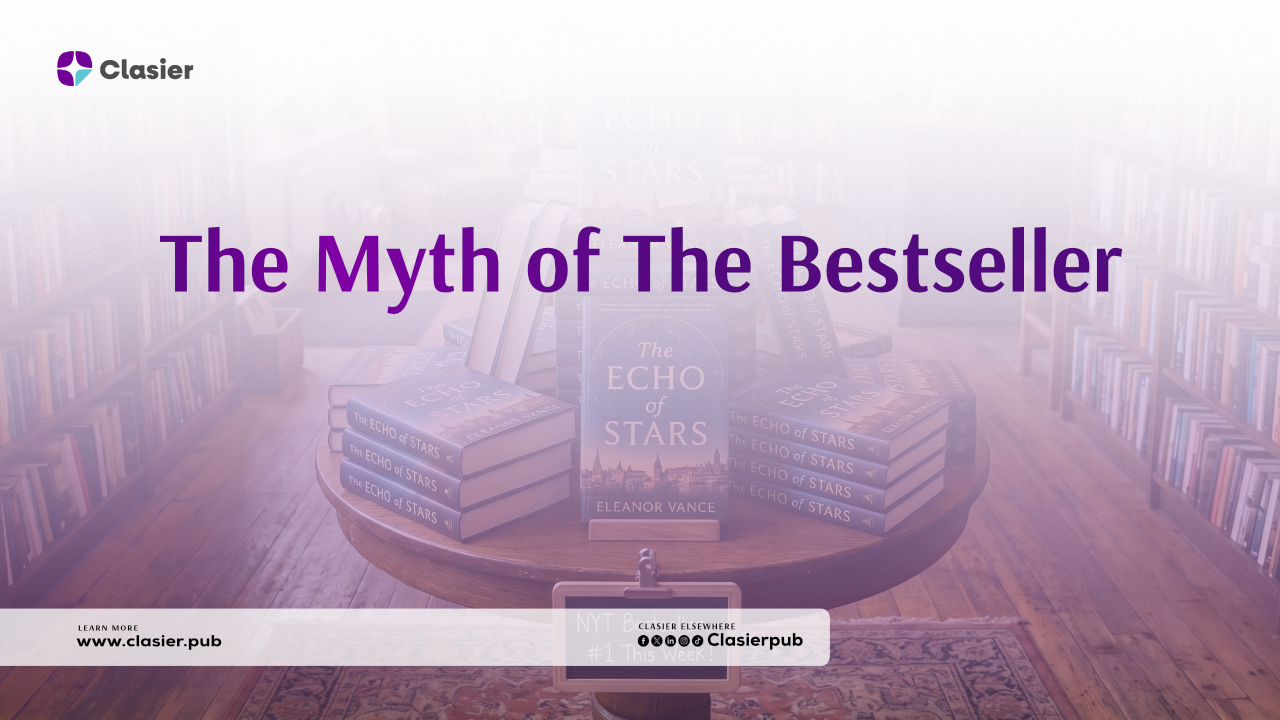
Why Most Successful Authors Haven’t Become Bestsellers Yet—and Why That Might Be Good News
Every author has imagined it at least once. The email from their publisher. The congratulatory phone calls. The social media posts announcing that their book has made a bestseller list. In publishing, few labels carry more prestige than bestseller. It has become the benchmark by which many writers measure success and the milestone many believe will validate years of work.
But… what if the publishing industry's most celebrated achievement is also one of its most misunderstood?
Bestseller status is one measure of success, but it is not the only measure of success, because sales doesn’t always equal quality. There is nothing mythical about becoming a bestseller. It is a remarkable achievement, and one many authors rightly aspire to. The myth is the belief that it is the only outcome that matters.
“If my book becomes a bestseller, I've made it. If it doesn't, I've failed”
This right here, is the MYTH.
Many writers assume that a New York Times or USA Today bestseller list is the ultimate goal. In reality, bestsellers are a tiny slice of the industry. For authors, the bestseller list has pretty much become shorthand for success. Commercially, culturally, psychologically, it’s the credential that everyone, even non-readers, recognizes.
However, not making a bestseller list doesn’t mean you’ve failed. Many authors who never hit #1 still build long, successful careers. As one group of indie authors summed up, there are many ways to measure success beyond sales charts – connecting with readers, leaving a legacy, or simply enjoying creative freedom.
Let us begin with an important clarification: there is nothing wrong with wanting to become a bestseller. Bestseller lists exist for a reason. They highlight books that have captured significant reader attention, generated strong sales, and, in many cases, sparked important cultural conversations. For authors, appearing on a bestseller list can open doors to new publishing opportunities, speaking engagements, media visibility, and wider readership. It is a milestone worth celebrating and, for many writers, a goal worth pursuing.
The question is not whether bestseller lists matter. They do. The question is whether they are the only measure of a book's success. As Mary Wiley states;
“You do not need recognition from a best-seller list to be a best-seller and you definitely do not need recognition from a best-seller list to have a thriving, fruitful author career”
A Bestseller List isn’t Always a Payday
It’s easy to equate bestseller status with riches, but even big-selling books don’t always translate to big income. When a title does explode in one week (say 5,000–10,000 copies) and makes the list, it usually comes with a large publisher advance and heavy marketing. Those costs must be recouped before the author sees extra royalties.
Bestseller lists only reflect velocity of sales – not overall success of a book. A book that rushes 10,000 copies in a week will hit lists, but a “tortoise seller” moving a few hundred per week for years might never chart at all, even though its lifetime sales and impact could be larger. Therefore, don’t measure your success solely in rushed book sales—slow and steady can and will win the race.
Beyond the Bestseller List: Influence and Longevity
In many fields, a book’s value is shown by how it’s adopted in classrooms or industry, not by its debut rank. For example, a research monograph or how‑to guide may sell only 500 copies a year but become a standard reference.
The truth is that influence and longevity often matter more than a single-week ranking. Countless books that never cracked the charts have still become influential classics. An academic textbook, a policy book, or a business title might change minds without ever selling hundreds of thousands of copies at once. This is why attention to an author’s purpose for writing a book cannot be overstated.
What is your intention? Are you writing a book primarily to generate income or create impact, or both.
The answer to this question often determines how success should be measured.
Defining Success: Readers, Not Rankings
Ultimately, successful authors often redefine success away from bestseller ranks to factors they can control. Instead of asking “did I make the bestseller list?”, they ask, “did I reach the people I wrote for?” or “is this book building my career?”
Many writers measure success by creative fulfillment, audience engagement or impact. For some, success is simply paying the bills with writing; for others it’s the joy of telling a story well or helping readers learn. And success can also be income, fulfillment, and the joy of storytelling – things beyond awards and chart positions.
What Most Authors Actually Look Out For
- Building an Audience
Reaching the right readers (even quietly) often matters more than hitting an arbitrary sales number. A book that resonates in a niche can lead to loyal fans and repeat customers, which is more sustainable than a single big spike.
- Career Momentum
Many mid-career authors see each new book as building their reputation. Success might be measured in growing newsletter subscribers, sold-out events, or invitations to speak – all of which come from having a consistent readership, not just one bestseller.
- Creative Satisfaction
Some authors feel most successful when they have the freedom to write what they want, learn through research, or polish their craft. Hitting personal goals (writing projects finished, positive reader reviews, or simply the thrill of creation) can be “success” in its own right.
- Financial Stability
Of course, making a living matters too. But many writers consider a few thousand pounds or dollars per year a win if it means they can keep writing. As Kevin McLaughlin notes, “My idea of success is earning enough income to pay all my bills” beyond that, every bit is icing—
Takeaway
So what is author success, really? If a novel never reached the NYT list but went on selling steadily for years, touching the right readers and creating long-term opportunities, would that count as success? For many authors, the answer is yes. Being on a bestseller list is a wonderful distinction, but it’s only ONE measure of success. In the end, writers ask whether their work has found its audience and stood the test of time. As one publishing expert notes, chasing bestseller status can sometimes be “chasing after the wind”, whereas creative fulfillment and reader impact endure.
Bestselling status brings prestige, but it’s not the whole story. Authors and publishers alike now see success as a multi-dimensional goal – encompassing steady sales, reader loyalty, career growth and personal satisfaction. By focusing on longevity and impact, writers can build fulfilling careers outside of the bestseller lists.
The goal isn't to criticize bestselling authors or suggest bestseller lists don't matter. Bestsellers are real achievements and often reflect excellent writing, strong marketing, market demand, or a combination of all three. The crux is, success can look like influence, longevity, reader impact, professional opportunities, consistent sales, or bestseller status; it all boils down to what you prioritize.
At Clasier, we encourage this broader view of success. We celebrate every book that finds its readers, whether it becomes a bestseller or not. A writer who never tops any list but consistently publishes well-received books may build a more enduring career – with multiple income streams – than someone who peaks with one sensational debut and then fades.
If no bestseller list ever acknowledges your book, but it reaches the people it was written for and continues selling for years, would that still count as success for you? Let us know in the comments section.